Building a non-addictive, intentional living app
Project
Zemlia
Role
Design Sprint
UX Design
UI Design
Team
1 founder
1 engineer
2 designers (me as lead, 1 junior)
Year
2024
Overview
Zemlia started with a big question:
How could technology help people live more intentional, connected lives—without exploiting their attention or data?
I joined the team to help turn a broad, values-driven vision into a tangible product direction.
As product designer and facilitator, I led a design sprint to move Zemlia from abstract ideas to a testable concept, aligning a volunteer team around a shared problem, a clear user journey, and early validation with real users.
Project & Process
Framing a hard problem
Zemlia set out to challenge the dominant social media model: addictive by design, driven by ads, and disconnected from real-world wellbeing. The challenge wasn’t just building features—it was designing a different incentive structure altogether.
When I joined, the founding team had been exploring the idea for nearly two years. There was strong conviction, but no clear product shape.
My first decision was to introduce a design sprint as a way to create focus, alignment, and learning without committing engineering resources too early.
From vision to concept
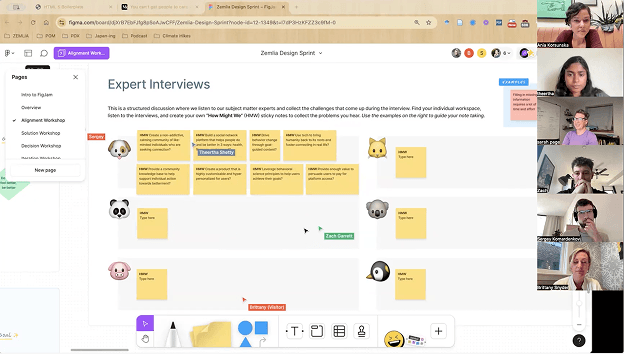
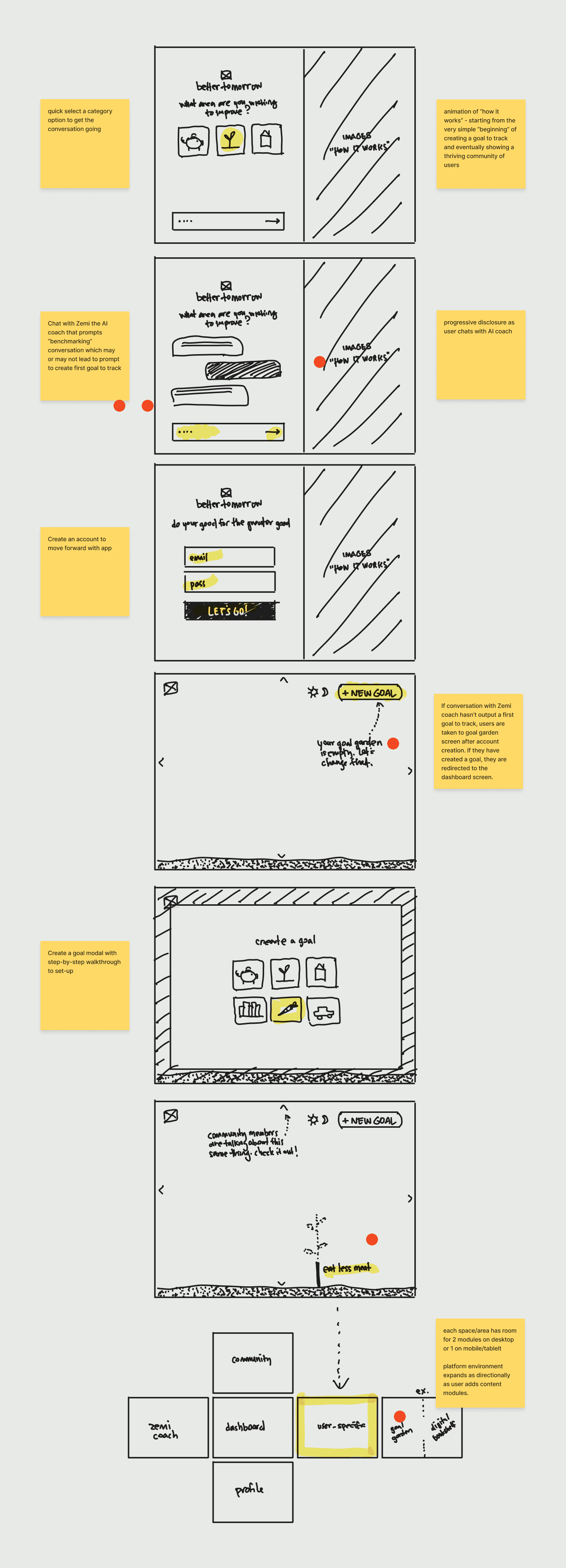
I facilitated a series of workshops to help the team move from big ideas to concrete decisions. We started with alignment: defining long-term goals, mapping the problem space, and learning from internal subject-matter experts.
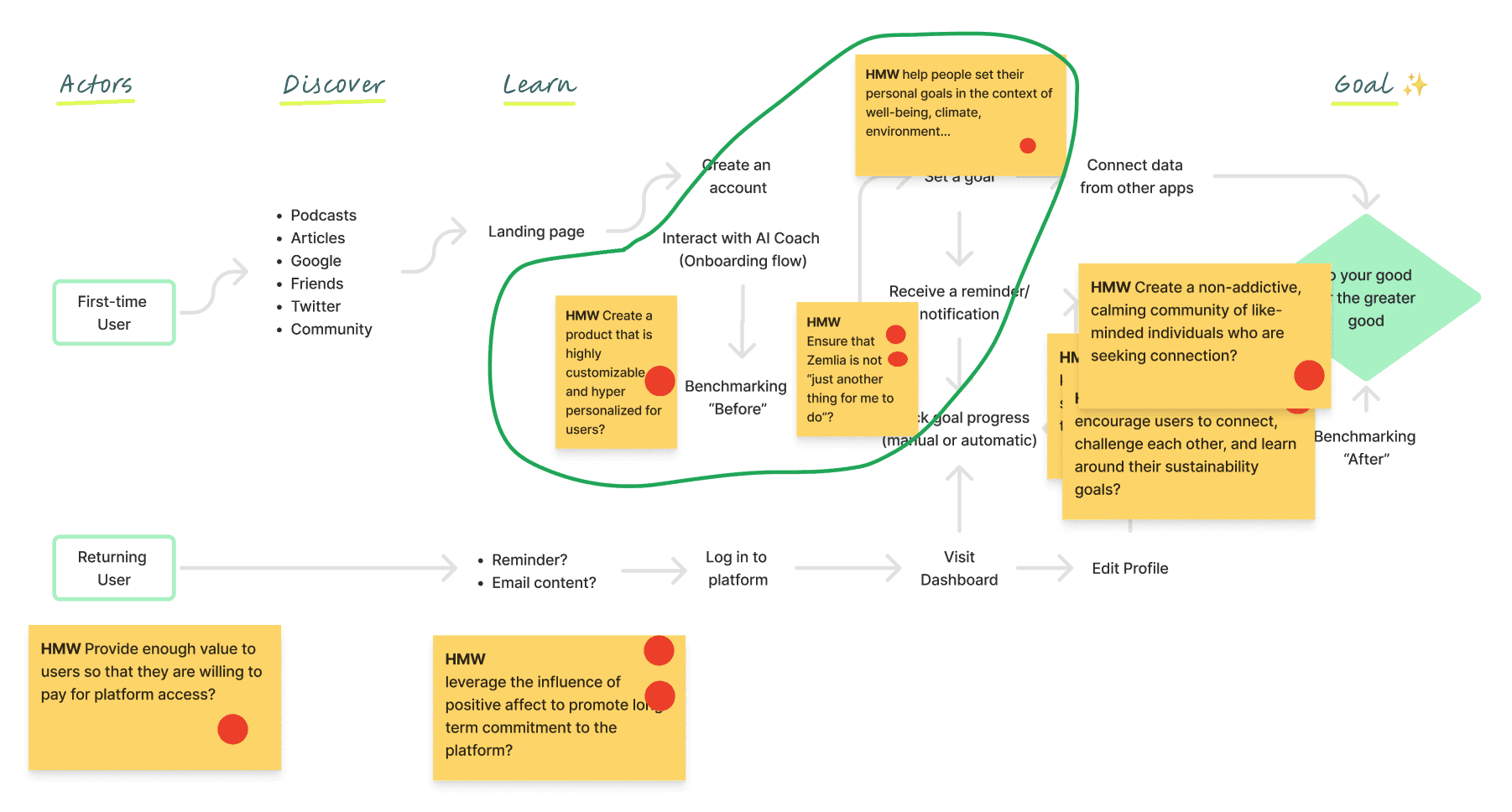
Using “How Might We” exercises, sprint questions, and structured divergence, we translated abstract values—intentional living, sustainability, wellbeing—into product opportunities we could actually test.
Testing before building
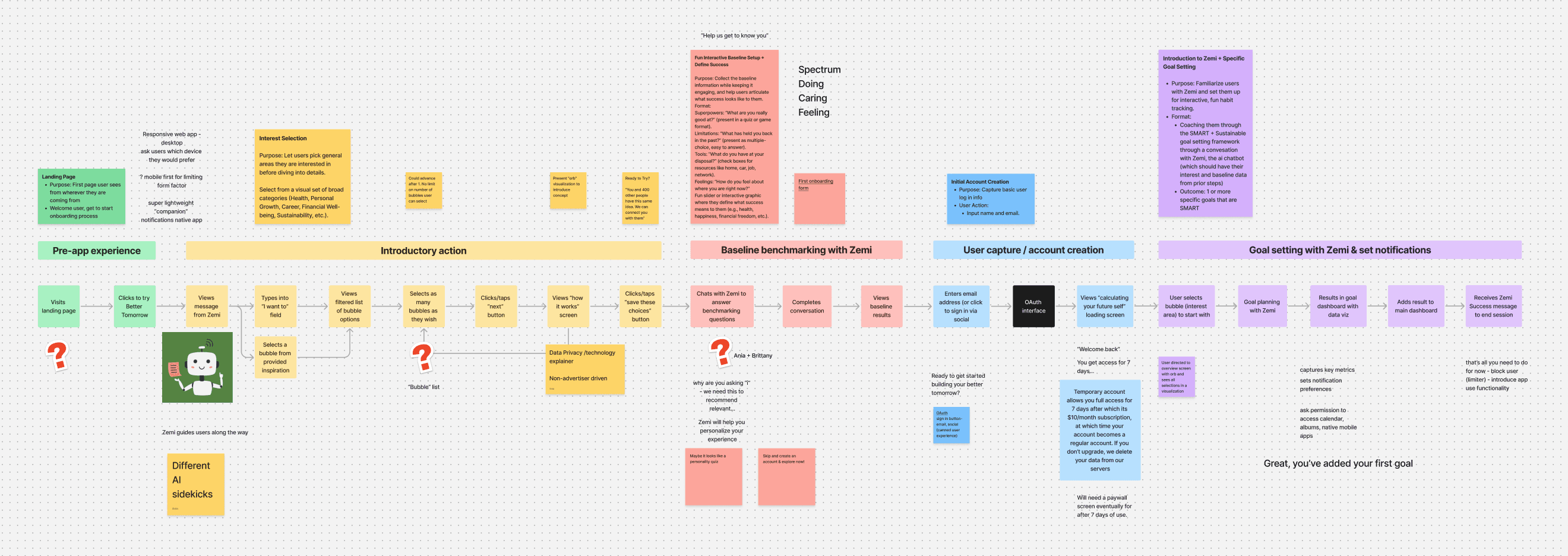
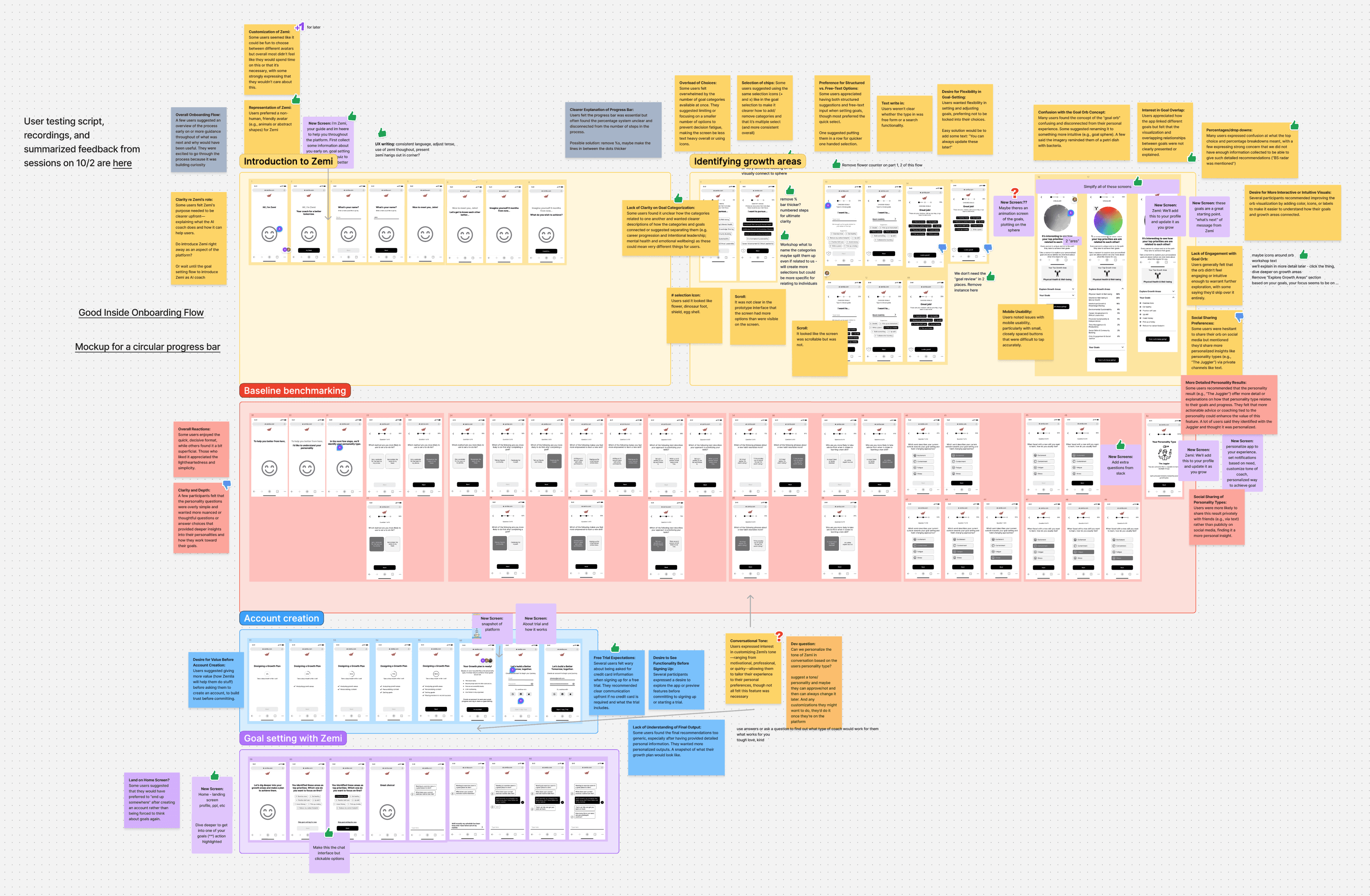
We created a low-fidelity, black-and-white prototype focused on flow rather than polish and tested it with nine users in one day. These sessions surfaced key insights:
Users wanted clearer value earlier in onboarding
Too many goal options felt overwhelming
Visualizations needed to be simpler and more intuitive
Users preferred landing on a home screen before diving into goal-setting
These findings directly shaped the next iteration of the designs.
Bringing the experience to life
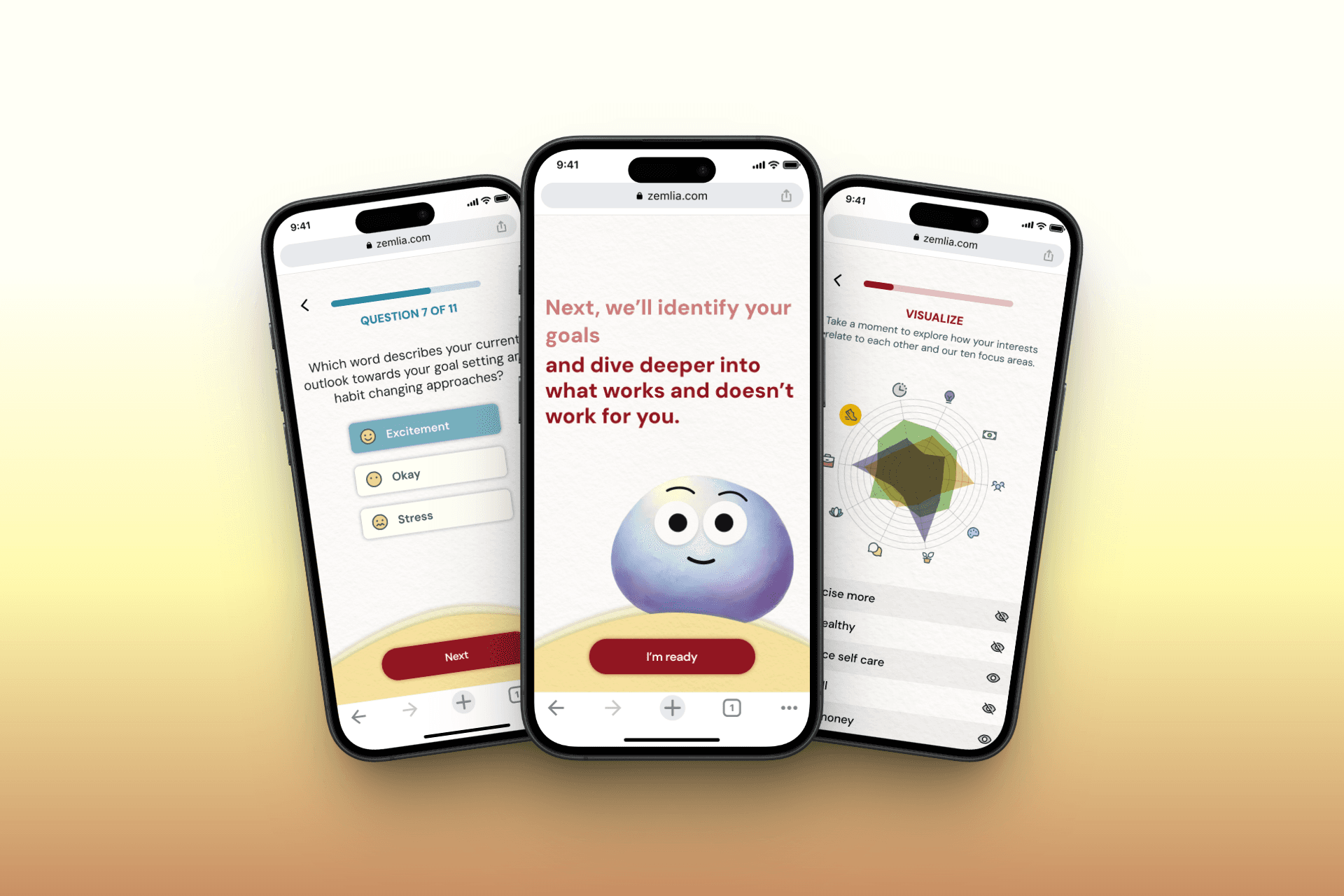
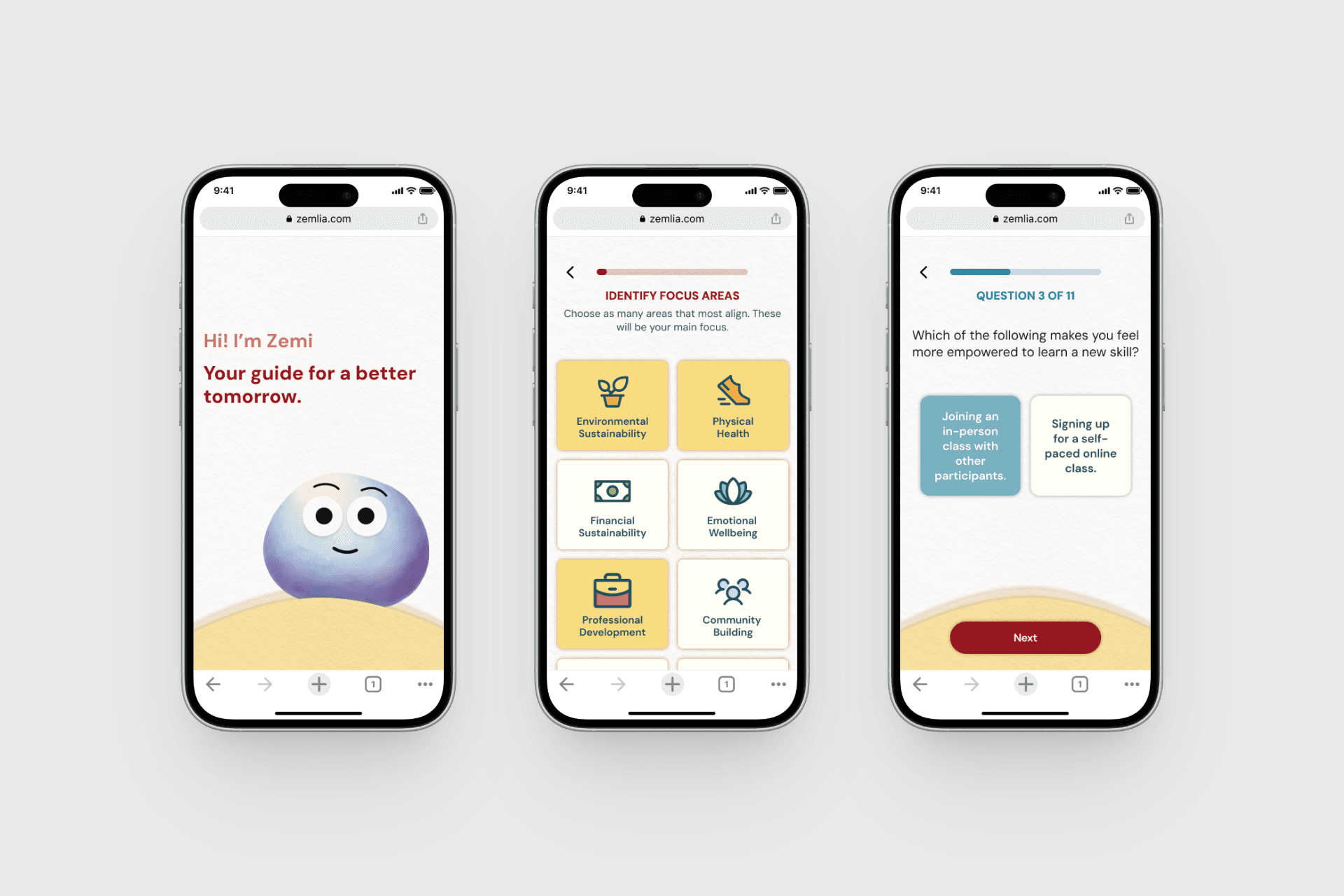
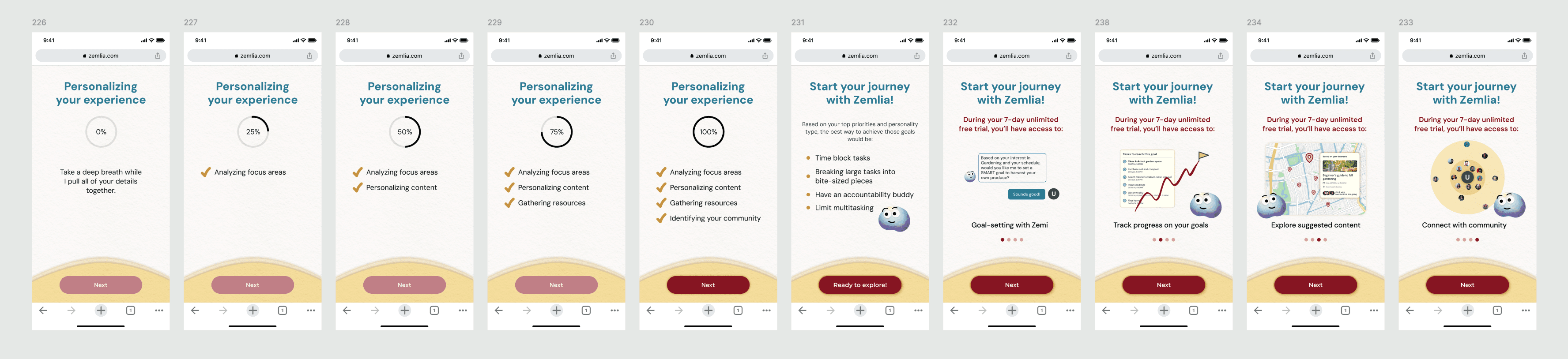
Working alongside another designer, I helped evolve the wireframes into high-fidelity onboarding screens. The visual direction aimed to feel grounded and human (imperfect, geometric, organic, and calm) reinforcing Zemlia’s anti-addictive ethos.
While the final visual style leaned more toward the founder’s preferences than my personal aesthetic, my focus remained on clarity, pacing, and reducing cognitive load for first-time users.
Outcomes & Learnings
The Zemlia project reinforced how challenging and necessary it is to design products that push against dominant industry incentives.
It sharpened my skills in facilitation, alignment, and early-stage product definition, especially in ambiguous, values-driven spaces.
"Sarah is a pleasure to work with. She brings amazing energy and professionalism to every meeting. Her leadership throughout the design sprint illustrated both her extensive experience as a designer and ability to adapt to different needs and circumstances, which has been crucial for a new team and an early stage startup."
— Ania Korsunska, Founder, Zemlia